.png)
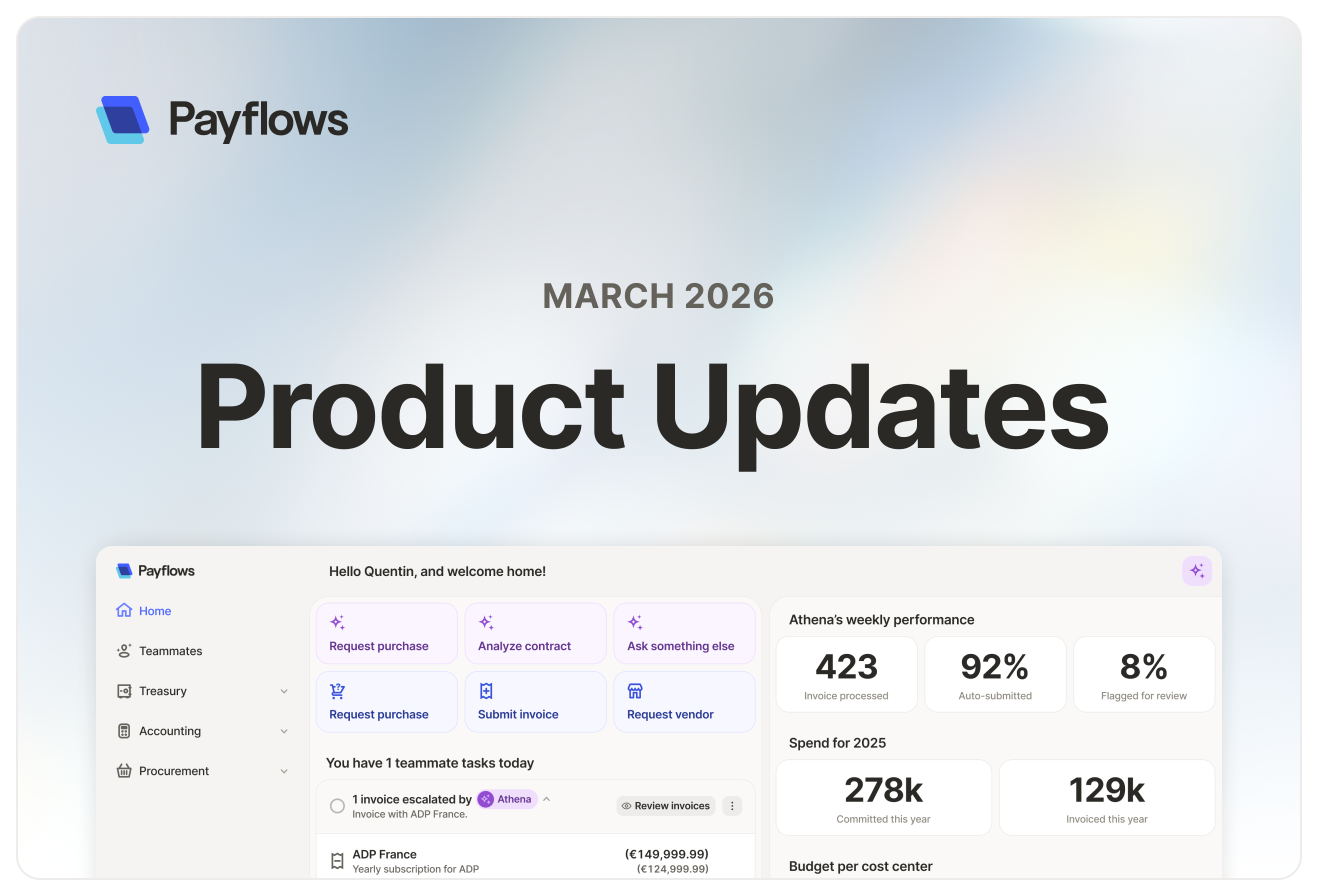
April is the month of Apollo. Our new AI agentic module joins Athena and starts filling purchase requests for your team.
Around it, the rest of the purchase workflow got sharper: documents now embedded in your POs, request forms that guide instead of overwhelm, approvals that match your real policies, and master data you can finally edit in bulk.
Here's what actually changed in April at Payflows.
Apollo, the AI Controller that structures purchase requests for you
Submit a purchase request in under 30 seconds. Complete, correct, and compliant.
Month-end doesn't break at month-end. It breaks at the purchase request: one wrong budget code or missing cost center turns into re-coding, broken accruals, and a delayed close.
Apollo, Payflows's AI controller fixes it at the source. Upload a quote and Apollo reads it, pre-fills the form, and validates the request before it enters your workflow.
Teams buy fast. Finance gets clean and compliant data from day one. The best way to fix month-end is to make sure it never breaks.
Athena now learns how your company works
The corrections you make on every invoice? You stop making them.
Athena our AI accountant already processes the bulk of your invoices on her own. The gap was the exceptions: the leasing supplier that must be booked gross with an exempt tax code, the vendor that needs different GL treatment. Now you write those rules in plain language, the way you'd explain them to a new hire.
Save once, and every new invoice follows your rules immediately. Guidelines cover the exceptions you know about. Her self-learning loop picks up the patterns from your corrections. The exception list shrinks every week.
Edit purchase orders with the document next to you
No more flipping between six tabs to remember what you're looking at.
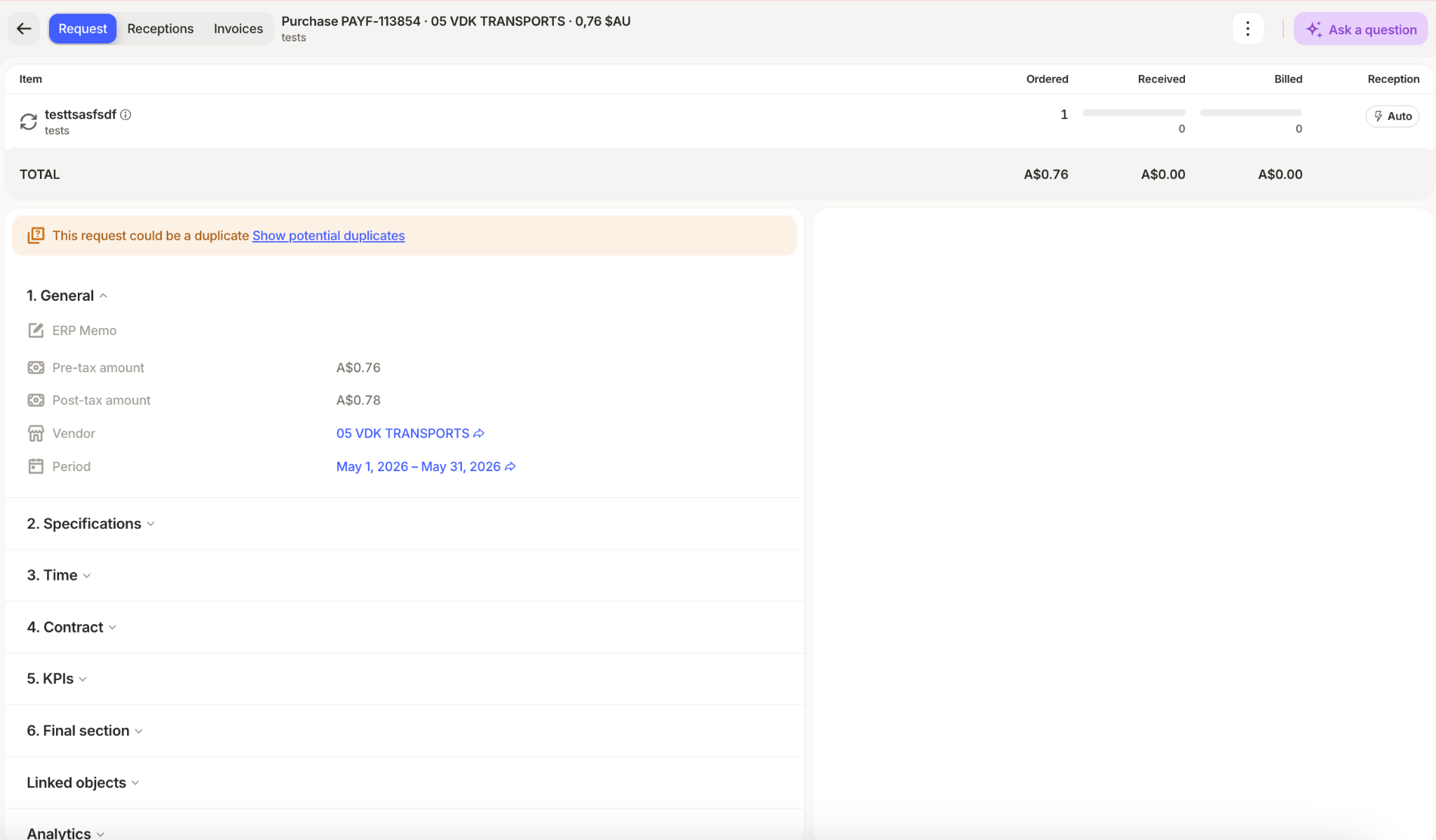
Documents attached to a PO now live inside the PO, each in its own tab. In edit mode, the screen splits in two: line items on the left, source document on the right. PDFs are searchable, images display inline, Word files render directly in the browser.
You catch discrepancies while you're editing, not three approvals later.
Bulk data management is a spreadsheet now
Update 500 records in the time it used to take to click through 50.
Export your payment terms, payment methods, entities, and GL accounts to CSV. Edit everything at once. Re-import. What used to take an afternoon of clicking through settings now takes three minutes.
Purchase request forms are now a guided wizard
Requesters know what to fill. Approvers know where to look.
Request forms grow over time: new fields for compliance, procurement, legal. The result is one long page nobody enjoys. You can now split any form into labeled sections. Requesters move through a step-by-step wizard with a progress bar. Approvers see the same sections as collapsible panels and jump straight to what they need to review.
Fewer errors going in. Faster reviews coming out.
Instant visibility into who has access to what
Who can see vendor bank details? That's now one click, not a support ticket. Click any number to see exactly who has access. Filter by team. Hover to see permissions. Access reviews and audit prep stop being archaeology sessions at midnight.
Approval workflows that match your real policy
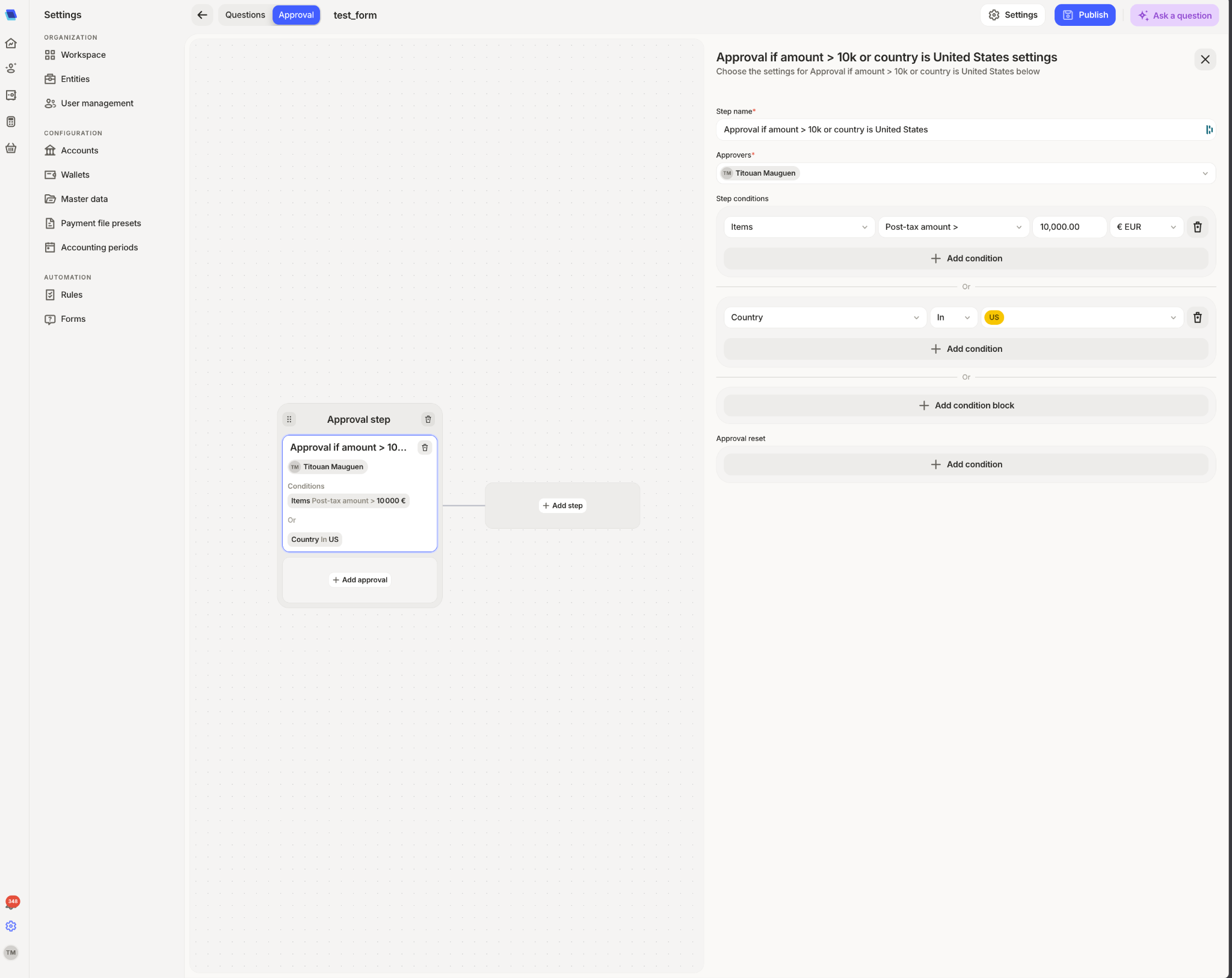
Over €10,000, or from a strategic vendor. One approval step now handles both.
Until now, conditions on a step only combined with AND, so covering two trigger cases meant cloning the same step twice. The approval builder now supports condition blocks: AND within a block, OR between blocks. One step, multiple trigger paths, no duplication.
It works on invoice, purchase order, and vendor workflows, plus intake form triggers. Your existing workflows behave exactly as before.
That's a wrap for April. May is already underway, with more updates coming soon.
.png)





.png)
.png)