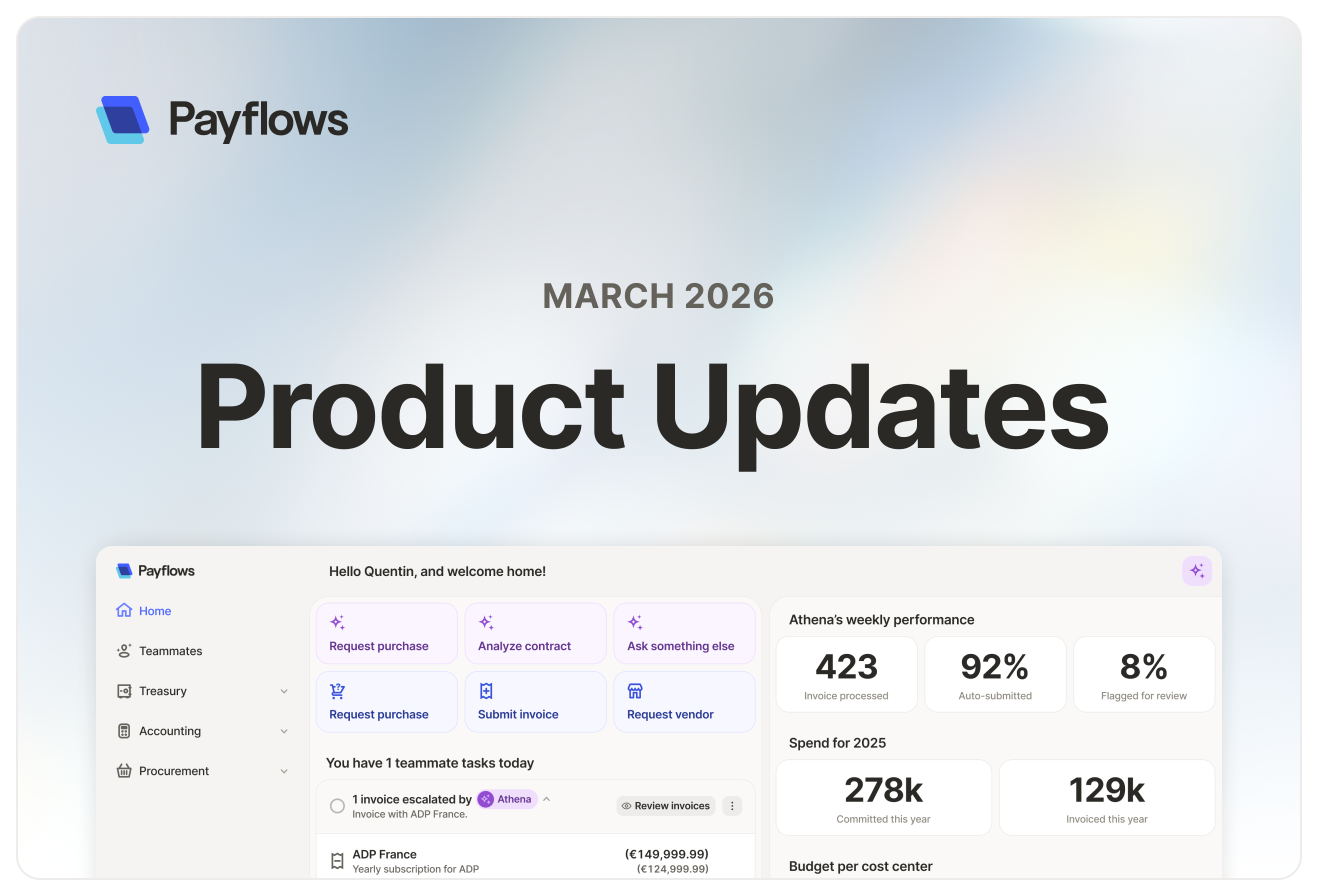
March was the month we went all-in on autonomy. We shipped Athena, our first fully autonomous AI accountant. We connected Payflows to external AI systems so your finance workflows can run on autopilot. And we rebuilt how you manage organizational structure and budgets so changes don't break your books. Here's everything that went live.
Athena, the first fully autonomous AI accountant
Invoice processing doesn't scale. Manual data entry, PO matching, vendor validation, GL coding, approval routing. Finance teams were drowning.
We launched Athena in February 2026. She reads invoices, matches to POs, validates bank details, codes GL accounts, and submits to approval. High confidence? Auto-submit. Unsure? Drafts for review. She audits herself before submission: cross-checks every field against the source PDF, runs the math, shows confidence scores.
Result: Up to 95% touchless processing. AP teams manage exceptions, not data entry.
E-Invoicing Expansion
If you operate in Italy or Belgium, you know the drill. Government portal spits out an invoice. You download it. You move it into your system. Repeat 500 times a month because that's compliance now.
We plug directly into Italy's SDI and Belgium's Peppol. Invoices land in Payflows automatically. AI processes them like any other invoice.
Result: E-invoicing compliance without the manual garbage collection.
Chart of Accounts Dimensions – Version Management
The Chart of Accounts is how your company organizes money. It tracks which department spent what, which project a cost belongs to, which office it came from. Changing this structure is dangerous. One mistake and suddenly every financial report shows wrong numbers, and expenses get charged to the wrong department.
Changes now go through a review process first. You draft your changes, see exactly what will be different, and someone approves it before it goes live. If it's rejected, nothing changes. Every edit is logged so you know who changed what and when.
Result: You can reorganize your finances without accidentally breaking everything.
New Org Structure
Most systems force you to organize financial data one way. When your org structure changes — restructuring, new divisions, M&A — updating it live risked breaking reports and sending transactions to the wrong place.
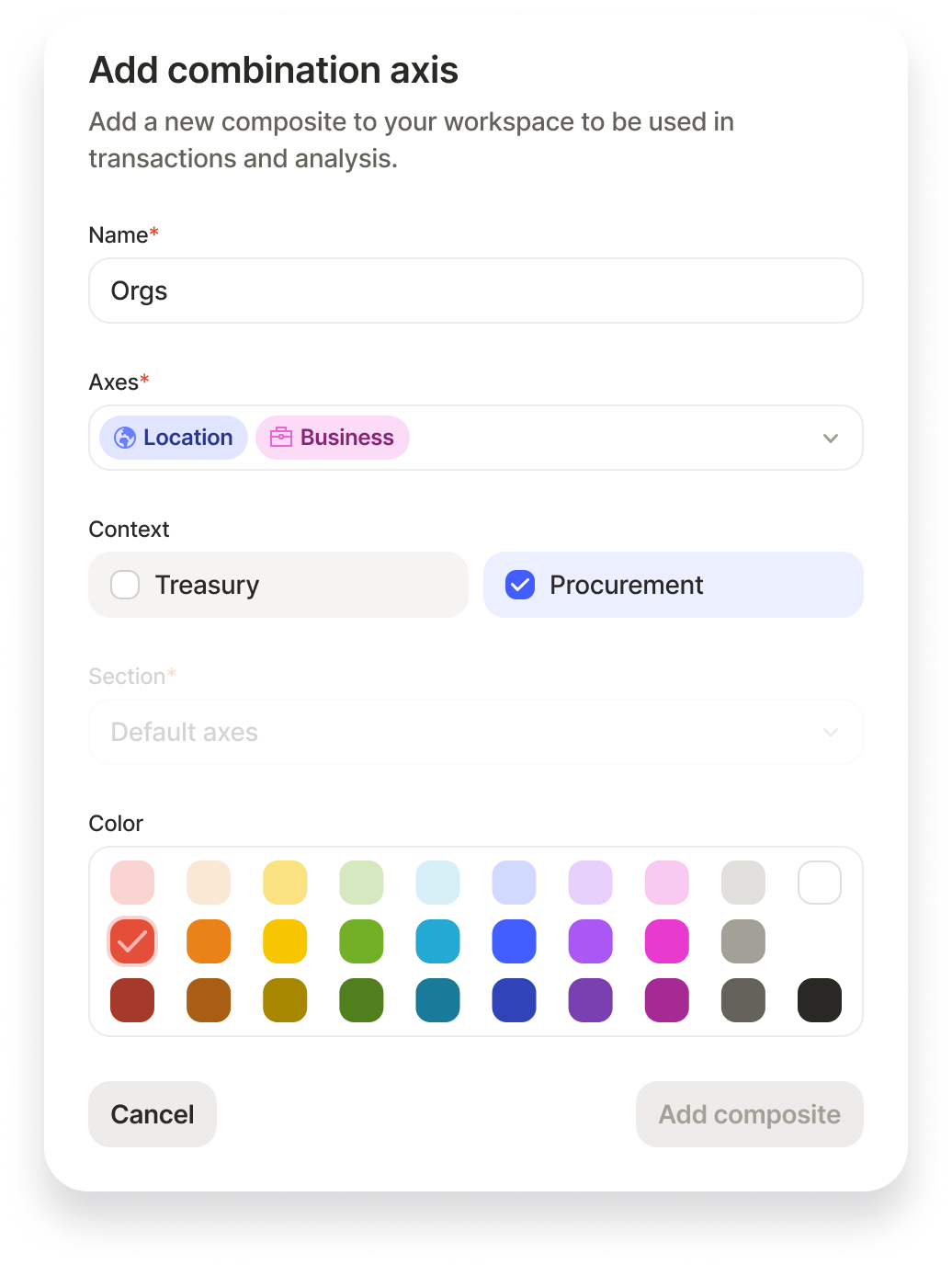
Payflows now supports composite organizational axes. Layer multiple dimensions (department, business owner, cost center, project) and map them to transactions. Changes are drafted with an effective date, reviewed as a full diff, then approved before going live. Rejected changes stay frozen. Every edit is logged.
Result: Restructure your org without breaking your books — add dimensions, reorganize departments, all with full review and traceability.
Budget Module
Someone submits an expense. You approve it. Three weeks later finance tells you that line item was 40% over budget and now Q2's forecast is cooked.
Budget checks now happen at intake. Over budget? It routes to whoever needs to approve the exception. Want to set it up fast? Download the template, fill it in, upload it back.
Result: You find out about budget problems when you can still do something about them.
MCP Server – External AI Integration
Your company's financial data lives in different places. Bills in one system. Purchase orders in another. Vendor info somewhere else. If you want to ask "which vendors haven't been paid in 60 days?" you either build custom software or spend an hour in Excel.
We built a bridge between Payflows and AI assistants like Claude, Dust and Mistral AI,. Now you can ask questions in plain language and get instant answers from your real data. You can also tell the AI to do recurring tasks for you: close out the month, clean up old purchase orders, cancel unused company cards, group payments by due date. The AI handles it.
Result: Your finance work runs on autopilot.
%20(2).png)
That’s March. More coming in April!
.png)





.png)
.png)

.png)